

The Ghana Health Service (GHS) and the International Organization for Migration (IOM) have just concluded an intensive four-month public health campaign against Mpox, that has reached more than 30,000 people in border communities where high population mobility increases disease transmission risks.
Implemented from August to November 2025, the campaign combined field assessments, capacity-building, and community-focused interventions to reinforce Mpox prevention and response capacities across the Ghana’s Western Region border areas.
“This intervention has greatly strengthened our ability to detect, report, and respond to public health threats at the community and border levels,” said Dr. Gifty Amugi, Western Regional Deputy Director of Public Health. “The
Ghana’s Western Region has accounted for nearly 44 percent of the country’s suspected Mpox cases, underscoring the urgency of proactive prevention and response in these transit areas.
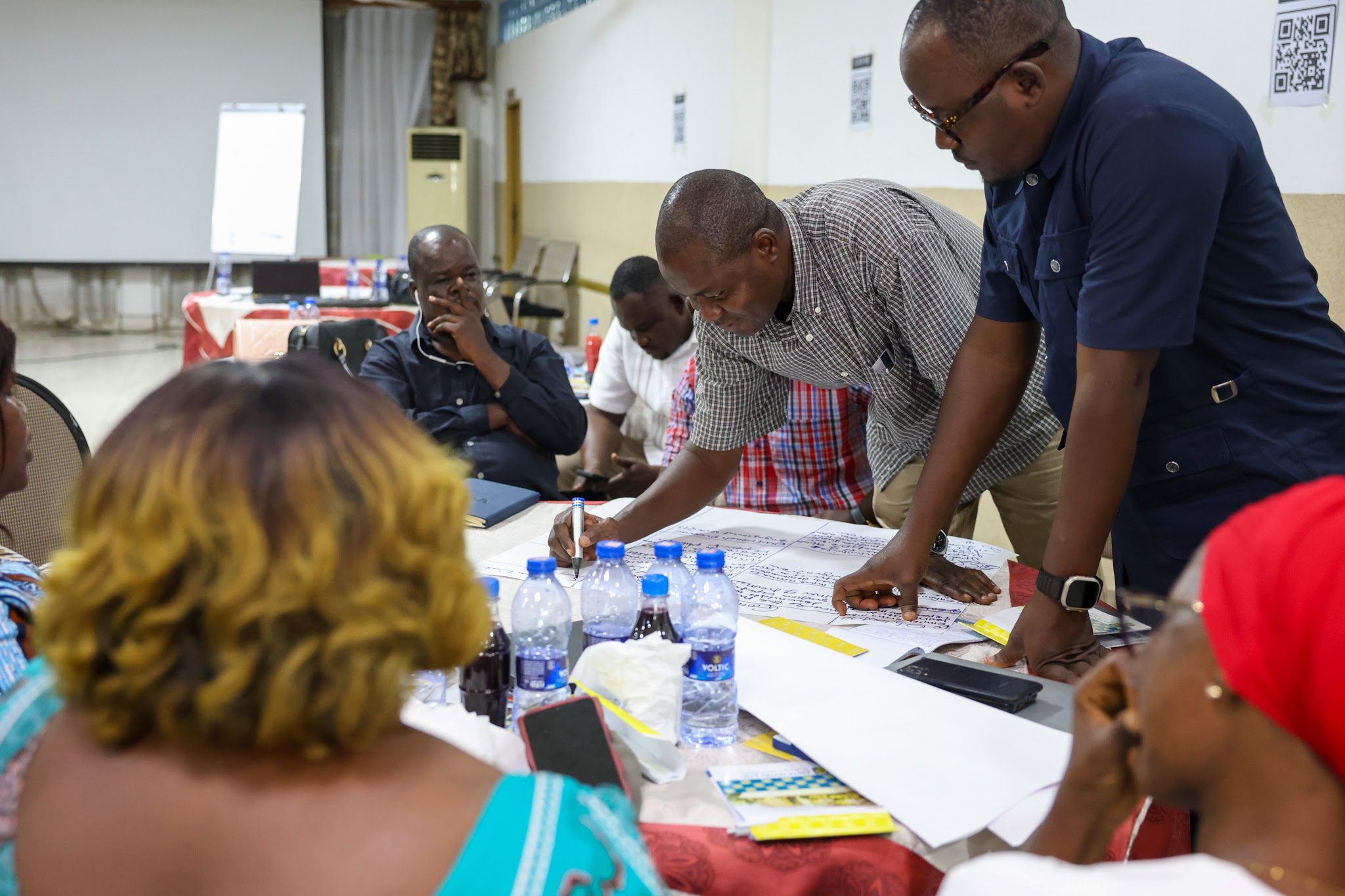
The campaign included Population Mobility Mapping (PMM), Mpox surveillance training, community event-based surveillance (CEBS), and risk communication and community engagement (RCCE), reaching health workers, community-based volunteers, and local surveillance structures in the Jomoro Municipality and the Sekondi–Takoradi Metropolitan area.
IOM Boosts Early Warning Systems and Cross-Border Mpox Readiness
The PMM training equipped Port Health officers with enhanced skills to collect and interpret mobility data to inform public health responses, followed by a field mission in Elubo where teams identified key mobility routes and population movements critical to strengthening disease surveillance. Building on this foundation, Mpox surveillance training brought together health workers from Jomoro Municipality and later from Takoradi for practical sessions on case detection, infection prevention and control, and reporting protocols, including simulation exercises that reinforced real-time response competencies.
“For our health workers and communities in Jomoro, this intervention has been transformative,” said Gabriel Yengliereh, Jomoro Municipal Health Director. “We are already seeing stronger collaboration between health facilities, border communities, and surveillance teams, an improvement that will continue to protect our people long after this project.”
Community engagement was central to the effort, with CEBS training in Elubo preparing volunteers, community health workers, and surveillance officers to recognize and report unusual health events. During the nine-day field phase, more than 7,000 families received Mpox awareness messages, extending early warning mechanisms beyond health facilities. Risk communication activities engaged broader audiences through local radio broadcasts, including one featuring IOM Ghana Goodwill Ambassador Kofi Kinaata that reached an estimated 20,000 listeners, while a two-day van campaign extended coverage across border communities.
“Mobility shapes how diseases spread and is therefore central to how we must prepare and respond,” said Dr. Samuel Ahadi Baghuma, IOM Ghana Chief Migration Health Officer. “Through these trainings and field activities, we have strengthened early warning systems, equipped frontline health workers, and ensured that communities most at risk are not left behind.”
For more public health updates and in-depth coverage on community resilience initiatives, visit: LouisaOlaniyi.com.ng






































































































































































































































































This was beautiful Admin. Thank you for your reflections.