Djibouti went to the polls on Friday as voters participated in a presidential election widely expected to extend the long rule of incumbent Ismaïl Omar Guelleh.
Guelleh, aged 78, has been in power for over two decades in the small Horn of Africa nation of roughly one million people. His continued leadership is anticipated following constitutional changes last year that removed presidential age limits.
The election features just one challenger, Mohamed Farah Samatar, a former member of the ruling party. Analysts describe the contest as offering limited competition, with opposition groups frequently boycotting elections over concerns about political freedoms.
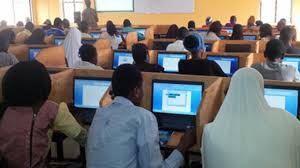
People line up to vote at a polling station during the 2026 Djibouti presidential election, Friday, April 10, 2026. (AP Photo/Guirreh Moumin)
In the 2021 presidential election, Guelleh secured nearly 99% of the vote, further underscoring the dominance of his long-standing administration. He originally assumed office in 1999, succeeding his uncle, former President Hassan Gouled Aptidon, and extending a political lineage that has shaped the country for decades.
Djibouti Under Watch as Foreign Powers and Observers Monitor Election
Regional monitoring teams from the African Union and the Intergovernmental Authority on Development were present to observe the electoral process as voting took place across the country.
“The scrapping of term limits in Djibouti is less about electoral competition and more about preserving regime continuity in a highly strategic state,” Mohamed Husein Gaas of the Raad Peace Research Institute told The Associated Press.
“While it raises concerns about democratic backsliding, external actors are likely to prioritize stability given Djibouti’s critical role in Red Sea security and global trade routes, especially amid ongoing tensions in the Middle East,” he said.
Djibouti’s strategic importance is reinforced by the presence of multiple foreign military bases, including those operated by the United States, China, France, and Japan. These partnerships, along with port services provided to landlocked Ethiopia, form the backbone of the national economy.
However, the country’s economic model remains vulnerable. Heavy dependence on Ethiopian port usage, combined with disruptions in global shipping (particularly in the Red Sea corridor) poses ongoing risks to national revenue stability.
Stay updated on developments across Africa and global politics by visiting LouisaOlaniyi.com.ng for more timely news and in-depth reports. Explore the latest stories and analyses as they unfold by checking the website regularly for continuous updates.