
This examines how accidental bank transfers are becoming a troubling feature of Nigeria’s cashless economy, where some recipients quickly spend, hide, and a worrying few brazenly refuse to refund money sent in error to their accounts.
When Richard Okoye received a credit alert of about N300,000 on his phone one morning, he stared at the screen in disbelief.
As it turned out, the money had been mistakenly transferred into his account by the old-generation bank he used.
For a schoolteacher surviving on modest wages, the sudden windfall felt like a rare stroke of fortune. His wife, however, was less persuaded. With a mix of suspicion and curiosity, she asked where the money had come from. Okoye had no clear answer.
All he knew was that the alert carried the name of his bank and that no explanation accompanied it.
At first, doubt lingered. He suspected it might be an error. But caution soon gave way to excitement.
Within hours, the then 39-year-old made his way to the nearest ATM and withdrew a large portion of the money.
What followed was a spending spree driven by relief and delight: a hurried trip to the market to purchase items he had long postponed, followed by a stop at a nearby pub, where drinks flowed freely.
To Okoye, the money felt almost divine, reminiscent of the biblical account of the prophet Elijah, sustained in famine by bread and meat delivered by ravens.
But this providence, it turned out, came with consequences.
After about three months, the bank called Richard and asked him to return the money, explaining that it had been transferred to his account in error.
“That was when he called me and asked for N300,000, but I couldn’t raise the money. All I had was for my building project at the time.
“The bank was threatening to arrest him. In fact, they had already reported him to the police, and the police had started calling him on the phone, too.
“After much stress, he refunded the money to the bank; otherwise, he would have been arrested, charged in court, and jailed. His experience was eye-opening,” one of his relatives, Benjamin, recounted to reporters.
‘I sent N500,500 instead of N50,500’
On November 21 last year, a legal practitioner, Ibrahim Lawal, was in Benin City, Edo State, where he attended the Nigerian Bar Association National Executive Council meeting.
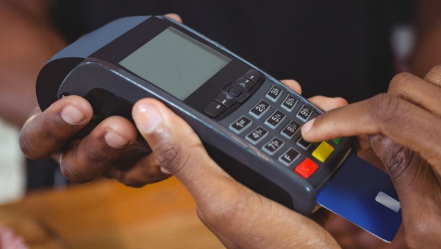
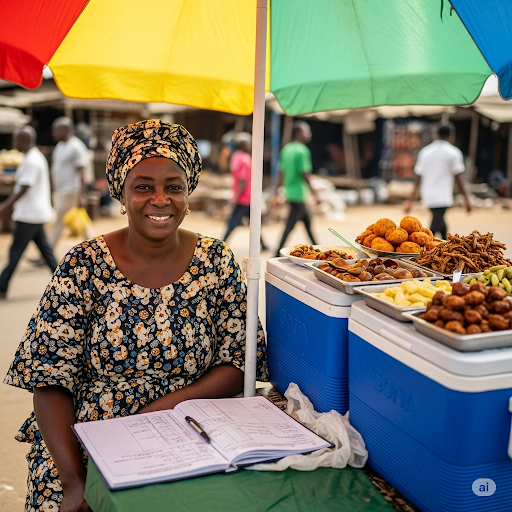
While in the city, the chairman of the NBA Ibadan branch stopped at a market, where he patronised a palm oil seller and paid via bank transfer to a Point of Sale terminal.
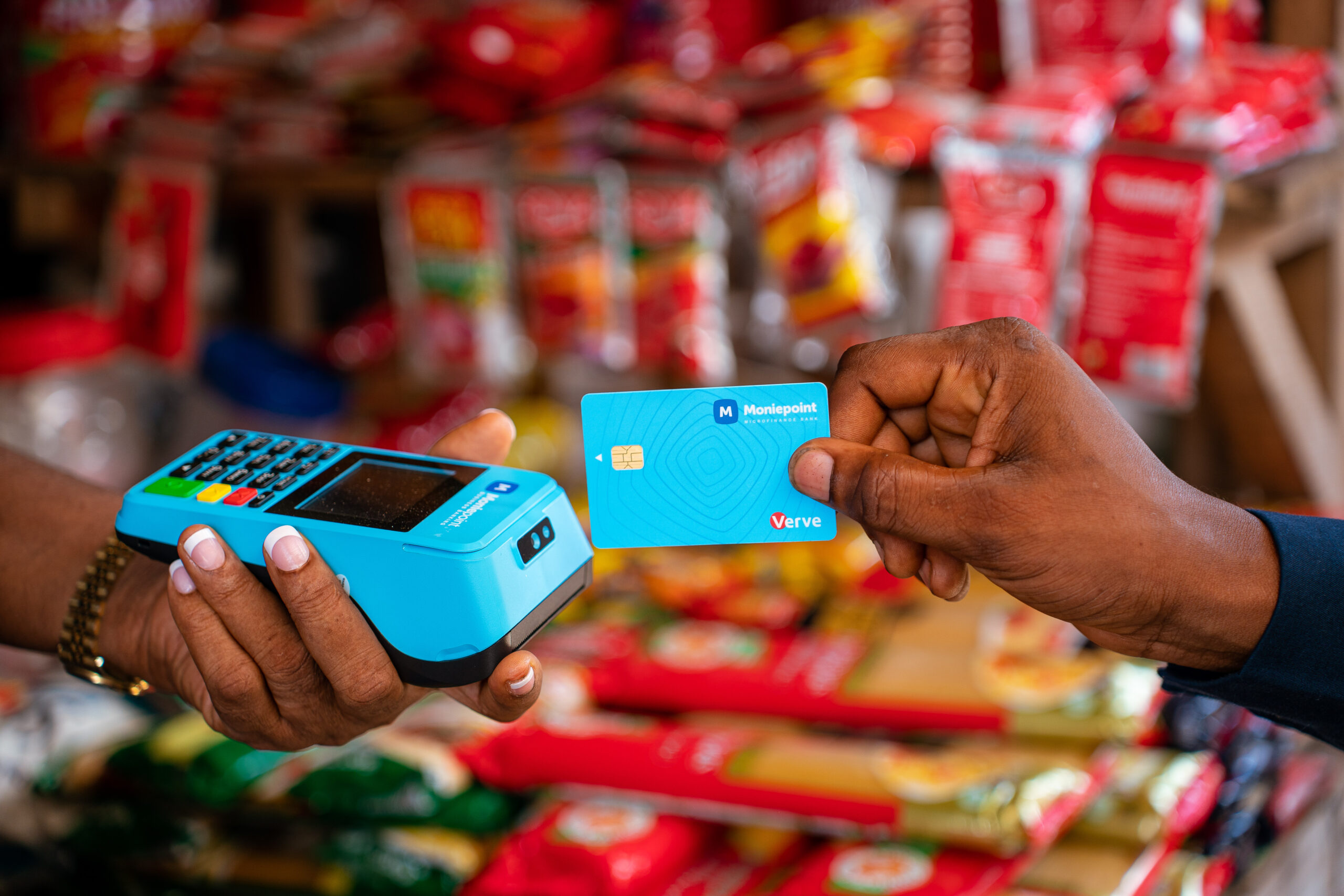
Driven by Central Bank of Nigeria initiatives, POS agents have become ubiquitous in Nigerian markets, offering digital services such as cash withdrawals, transfers and bill payments, far beyond simple cash access.
“The transfer was done to a POS account number,” Lawal told Saturday PUNCH. “But instead of sending N50,500, I unknowingly transferred N500,500 to the POS account.
“I did not receive any alert, and the POS operator also did not disclose that I had sent more than the required amount. When I later realised that I had paid N450,000 more than I was supposed to, I became distressed.”
Fortunately for Lawal, both a friend and his wife were present at the Bar Centre when he discovered the error.
“Folajuwon Banjo volunteered to represent me by helping to obtain an order for reversal. My account officer, Opeyemi Amole, also escalated the matter to the digital bank I paid into.
“Truthfully, I had lost hope of recovery after being informed that there was no money in the recipient’s account. But at about 11.am on Tuesday, January 6, 2026, I received an alert of N450,000, being a reversal of the money. It truly felt like a New Year’s gift,” he added.
Erroneous bank transfers
Mistaken bank transfers, often referred to as “wrong transfers” or “fat-finger errors”, are becoming an increasingly troubling feature of Nigeria’s rapidly digitising banking sector.
In many cases, recipients refuse to return funds, creating distress for senders and, in some instances, forcing legal intervention.
A report published by EdPlugNG in November 2025 revealed that nearly half of Nigerian banking users suffered financial loss due to interface-related errors within the previous 12 months.
This challenges the popular narrative that network failure is the sole culprit in Nigeria’s digital banking woes.
With the acceleration of the CBN’s cashless policy, transaction volumes through mobile apps and USSD platforms have surged.
However, while banks invest heavily in server capacity, far less attention appears to have been paid to human–computer interaction design.
The report, which analysed 12,000 social media support tickets, found that 42 per cent of respondents admitted to making at least one irreversible mistake, such as a wrong transfer or excessive airtime purchase, within the past year.
One in five users, representing 19 per cent, reported making minor errors, including clicking the wrong button or restarting failed transactions, on a weekly basis.
The study identified the “zero glitch” as the leading cause of financial loss, accounting for 34 per cent of reported cases. This typically involved users adding an extra zero, sending N100,000 instead of N10,000, often due to apps failing to auto-format figures with commas in real time.
Another 15 per cent of cases were classified as classic “fat-finger errors,” involving the selection of the wrong beneficiary from saved contact lists.
The report also identified a specific “fatigue window,” noting that such errors were three times more likely to occur between 9pm and 11pm.
A senior banker at a new-generation bank, who spoke on condition of anonymity because he is not authorised to speak to the media, told reporters, that banks sometimes mistakenly credit customers, often due to technological glitches during system upgrades or payment platform failures.
“These errors can occur when the wrong account number or amount is entered into the system. Software bugs can also cause funds to land in unintended accounts, whether dormant or active.
“In rare cases, such funds may even be linked to fraud. In all instances, recipients are required to contact their banks because reversals must follow strict regulatory procedures,” he explained.
Blocked by a recipient
When Farouq Bello (not his real name), a businessman, transferred N350,000 to one of his friends in urgent need of financial support for a project, he reclined in his chair with a sigh of relief.
But this changed when his friend called him back an hour later that evening of January 12 to inform him that he had not received any credit alert.
A knot of anxiety formed as Bello hurriedly reopened the banking app to recheck the transaction details. That was when the mistake stared back at him: the money had been sent to a wrong account, bearing the name Abiodun (surname withheld).
“Immediately, I reached out to him politely, explained that it was a mistake and asked him to refund the money,” Bello said. “Instead of doing the normal human thing and returning what was not his, this guy blocked me.”
He tried again, calling from another line, but that number was blocked as well. Growing increasingly desperate, Bello reached out to a friend, Yusuf, asking if there was any way to trace the recipient or persuade him to return the funds.
“We tried to gather everything we could, his phone number, his picture, any useful information at all. Later, another brother reached out to him and advised him to refund the money so he wouldn’t get himself into trouble. He didn’t respond either because he blocked him too,” Bello recounted.
One of Bello’s friends eventually managed to track Abiodun’s home address through his phone number, discovering that he resides in Ilorin, Kwara State.
Using yet another phone number, Yusuf finally got through to the recipient. What followed, Bello said, was a string of shifting explanations.
“He first claimed only N150,000 was left. Then he said his father was sick. Then another story came up. Long story short, he refunded just N50,000,” Bello said.
According to him, Abiodun promised to send the balance within “two or three days”, claiming that was all he could afford at the time. But weeks later, the promise remains unfulfilled.
Bello added that even after his friends shared Abiodun’s details on X and Facebook, appealing to the public to urge him to return the money, the outstanding N100,000 has yet to be refunded.
Further explaining the causes of such personal erroneous transfers, a finance analyst, Caleb Ohaeri, told reporters that most mistakes occur due to similarities in bank account numbers, missing digits, or confusion over names.
He said the first step for anyone who makes such an error is to immediately contact their bank’s customer care service and report the transaction as a mistake.
“For someone who receives money like this and does not voluntarily reach out to the sender to return it, I don’t think that alone constitutes a crime,” Ohaeri said.
“However, once a proper request is made and the recipient refuses to refund the money, a case can be opened, and it may be treated as fraud.”
He added that mistaken transfers are more common with mobile and digital banking apps, which often require only a phone number, unlike traditional banking systems.
“The sender should report the issue through the app, but there is no absolute guarantee of a refund. These platforms have built-in security prompts that ask users to confirm the recipient’s details. That is why people are advised to stay calm and double-check details before completing transfers,” he explained.
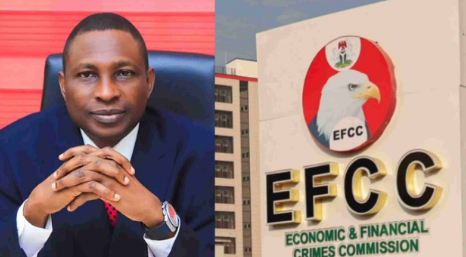
Directives and regulations from the Federal Competition and Consumer Protection Commission, the Central Bank of Nigeria, and the Economic and Financial Crimes Commission make it clear that money that unexpectedly appears in a bank account is not “free money” and may be linked to fraud or an erroneous transfer.
Yet, for some recipients, these rules appear to fall on deaf ears.
One such case is that of Kingsley Ojo, who unlawfully took possession of more than N1.3bn belonging to a bank.
According to the EFCC, the funds were mistakenly credited to Ojo’s account due to system glitches.
Investigations revealed that upon receiving the money, Ojo “transferred a good measure of it to the bank accounts of his mother, Itohan Ojo, and his sister, Edith Okoro Osaretin, and committed part of the money to the completion of his building project and the funding of a new flamboyant lifestyle.”
However, the EFCC’s Benin Zonal Directorate recovered and returned N802.42m to the bank, while over N300m was reversed directly from Ojo’s account.
On Tuesday, Justice W. I. Aziegbemhin of the Edo State High Court, Benin City, convicted and sentenced Ojo to one year’s imprisonment or a fine of N5m. The court also ordered him to restitute First Bank Plc with N272,252,193.59 within a stipulated period.
EFCC arrests
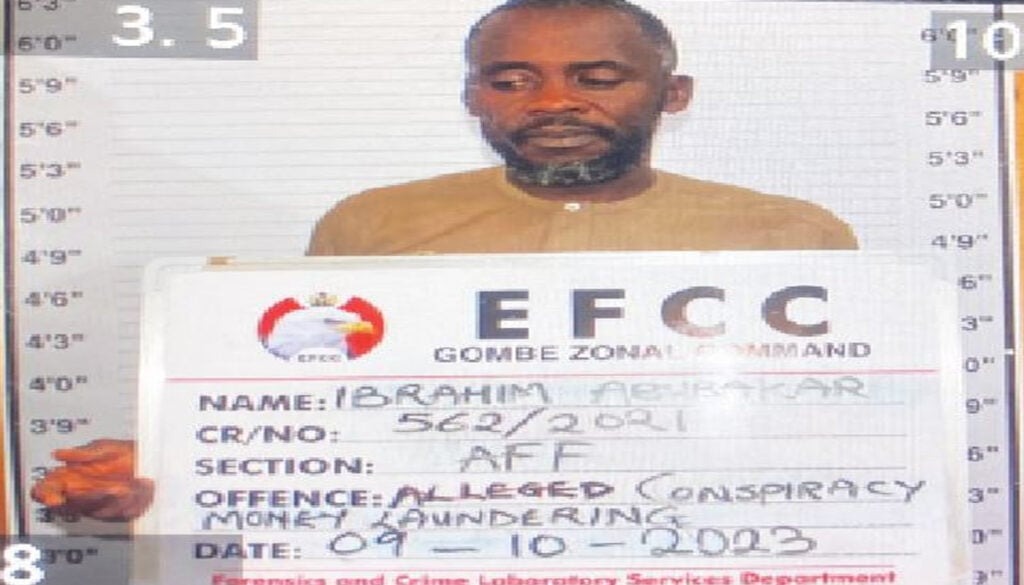
Similarly, in October 2023, operatives of the Gombe Zonal Command of the EFCC arrested the managing director of an agricultural firm in Jos, Plateau State, Ibrahim Abubakar, over the alleged theft of more than N57m.
The sum was reportedly paid into Abubakar’s company account in error by a firm that intended to pay another organisation within the same bank.
According to a statement signed by the EFCC’s Head of Media and Publicity, Dele Oyewale, after the bank alerted Abubakar to the mistaken credit, he allegedly transferred N5m each into his personal accounts in two different banks.
Attempts to withdraw the remaining funds led to his arrest and subsequent prosecution.
A year earlier, the EFCC arraigned a Nigerian Air Force officer, Haruna Samuel, for allegedly spending N20m inadvertently credited to his account.
The serving lance corporal at the Nigerian Air Force Base, Kaduna, was charged before the Kaduna State High Court on counts bordering on theft and criminal misappropriation.
The defendant, who denied the charge, allegedly committed the offence on December 3, 2020, after receiving the N20m said to have been erroneously transferred by his employer into his bank account.
Without expecting any payment of such magnitude from his employer, the EFCC alleged that Samuel failed to report the issue to his bank or employer and went ahead to withdraw part of the fund for personal use, including settling debts.
‘She spent our N800,000 on fabrics’
On May 2, 2025, an X user, Edith Okoli (@ii_kach), raised an alarm online after mistakenly transferring N800,000 to a wrong bank account through her banking app.
The registered nurse said she immediately reported the error at her bank, only to be told that it could take weeks before any recovery was possible.
Hoping for faster intervention, she proceeded to the new-generation bank used by the recipient, but was allegedly informed that “nothing could be done without a court order”.
“The receiver of the money has already started spending it, and the bank refused to release the receiver’s phone number so I could contact them. The money was contribution (ajo) funds,” Okoli said.
She recalled how her distraught mother went to the bank in tears, pleading with officials to place a lien on the recipient’s account pending a court order.
“The bank staff said nothing could be done. Customer care referred her back to my bank to send an email before the account could be placed on lien. She went back to the bank, met with the manager, and they promised to send an email to the receiver’s bank, but we couldn’t get a court order that Friday,” Okoli added.
Sharing a screenshot of the transaction, she identified the recipient as Nwakego (surname withheld), whom she said she was reliably informed had already moved the entire N800,000 into another account.
About two weeks later, Okoli shared an update, announcing that Nwakego had been arrested by the police.
According to her, she had been expecting N1m from someone on the same day the erroneous transfer occurred.
“Her brother deposited N300,000. Before her arrest, I had called her repeatedly to return my money. I pleaded with her and even sent text messages requesting the same. During one of our phone conversations, she threatened to sue me if I contacted her again,” Okoli said.
“Since May 2, I have incurred expenses amounting to almost half of the money. It pains me deeply. I truly wanted her to go to jail. She should thank my mum, that’s her saving grace. We had to consider that she has children. She should just pay me back and cover all the expenses I’ve made. Even after the police arrested her, she couldn’t pay anything. She had nothing on her,” Okoli added.
Resolving accidental transfers
Speaking with reporters, a legal practitioner specialising in business law, Emmanuel Omirin, said accidental transfers have become increasingly common, particularly among frequent transactors and users with limited digital literacy.
He noted that a single slip could redirect funds to an unintended recipient, but stressed that the law provides safeguards for victims of such mistakes.
“The first step is to formally notify the recipient’s bank, either by visiting a branch or using available reporting channels. The sender should provide the date and time of the transaction, the recipient’s name and account number, the amount involved, and supporting documents,” Omirin said.
“Once the report is processed, the bank may place a Post No Debit on the recipient’s account pending investigation and recovery. This is intended to preserve the funds and prevent further transfers.”
However, he explained that a PND imposed without a court order is only temporary, adding that the bank’s action is protected under its statutory obligation to mitigate financial risks, as provided for under Sections 7 and 18(6)(m) of the Money Laundering (Prevention and Prohibition) Act 2022.
Omirin also urged senders to notify their own banks with the same evidence, so both institutions can liaise effectively.
The lawyer criticised what he described as the sluggish response of some banks to reports of erroneous transfers.
“It often takes repeated follow-ups before action is taken, and that needs to change. The next option is to obtain a court order. The sender’s lawyer applies to the court by way of a motion on notice, supported with evidence. The court then reviews the application and may issue a reversal order.”
He added that there is also a non-litigation option under the Regulation on Instant (Inter-Bank) Electronic Funds Transfer Services in Nigeria.
“Under this framework, the sender reports the issue to their bank if the beneficiary refuses to refund. The sender’s bank then notifies the recipient’s bank, which is required to place a lien on the funds for up to two weeks and seek the beneficiary’s consent to reverse the money.”
If the beneficiary refuses, Omirin said the internal auditors of both banks are mandated to mediate within two weeks, with the outcome deemed final.
“Where the beneficiary has already withdrawn the funds or refuses to fund the account for a refund, the recipient’s BVN may be watch-listed, and the matter may be escalated to law enforcement by the sender’s bank,” he added.
Legal implications
Omirin stressed that while receiving money in error is not a crime, refusing to return it could attract criminal liability.
“It is criminal to convert property that does not belong to you. Blocking the owner, withdrawing the funds, or frustrating recovery can make the recipient culpable,” he said.
He explained that such conduct may fall under Section 383 of the Criminal Code, which defines stealing to include fraudulent conversion.
“Refusing to refund an erroneous transfer amounts to conversion rather than taking. If Mr A blocks Mr B, withdraws the money, or otherwise frustrates recovery, the law may infer an intention to permanently deprive the rightful owner,” Omirin said.
He noted that under the Penal Code, the offence attracts up to five years’ imprisonment, with an order for restitution, while under the Criminal Code, it is a felony punishable by up to three years’ imprisonment if no other penalty is prescribed.
Petty trader returns N330m
Although some citizens have chosen to take over money wrongly credited to their accounts, there have also been notable instances of individuals who returned such funds without pressure.
On December 30, 2025, a petty trader in Lapai, Niger State, Aisha Yelwa, was at a market purchasing new items for her shop when she noticed an unusual credit in her bank account.
The 41-year-old mother of six discovered that a staggering N330m had been mistakenly paid into her account.
Her decision to return the money came to public attention on January 1, after a community media platform, Lapai TV, reported how she walked into her bank branch in Lapai Local Government Area to refund the entire sum.
Despite being weighed down by debt and facing pressure from some individuals to remain silent and keep the money, Yelwa said she chose to return it.
“I don’t even know if I will ever see that kind of money again,” she told NTA News. “I didn’t even receive an alert, so I initially thought it was fake. It was only when I transferred N1m from it into another account that I realised the money was real.
“I cannot take what is not mine. People may praise me if I keep it, but if I die, who will bear the consequences? Since I returned from the bank, everyone has been blaming me for giving it back, but I don’t need money; what I need is peace in my life,” she added.
Also recounting a similar experience, a finance educator, Opeyemi Agboluaje, said his wife recently transferred N60,000 to a wrong mobile wallet account while attempting to move funds between her accounts.
“Panic set in as soon as we realised the mistake. We immediately called the recipient, a man named Uthman Ademola. To our relief, he answered, confirmed receiving the money, and assured us he would never keep what did not belong to him,” Agboluaje said.
“He returned N40,000 immediately, explaining that he had reached his transaction limit for the day. I was torn between hope and doubt, but to my surprise, Uthman stayed awake until midnight just to refund the remaining balance.”
This article was originally published on Punchng.com and has been adapted for further clarity.