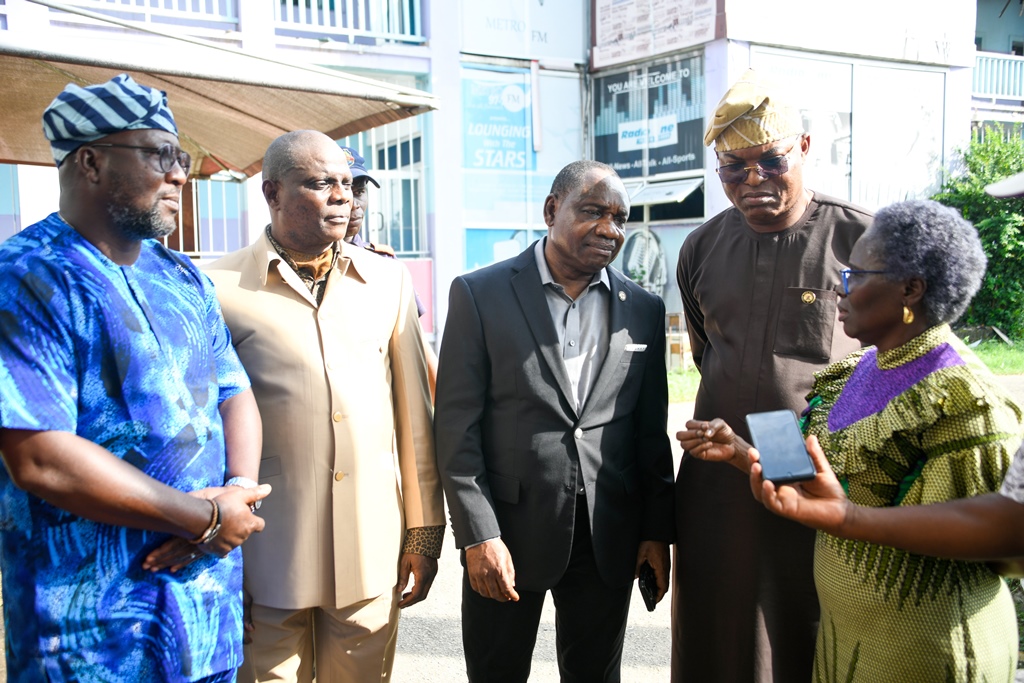
Aflao – Health and border officials from Ghana and Togo have established a formal system for sharing outbreak information and coordinating migration health response along their shared border, in a bid to strengthen early detection, improve coordination and protect communities on both sides of the border from cross-border health threats.
The establishment of the Ghana – Togo Bilateral Technical Working Group was agreed on August 20 after a joint meeting in the border crossing town of Aflao supported by the International Organization for Migration (IOM) funded by the Government of Canada. The Working Group has been mandated by the two countries’ authorities to develop a Ghana–Togo Cross-Border Ebola Preparedness and Response Protocol, including operational procedures, institutional responsibilities, implementation arrangements and validation.
“Strong national systems are essential, but when a public health threat emerges, our success depends on how well those systems connect between Ghana and Togo,” said Akue Moevi, a technical officer with Togo’s Public Hygiene Division, speaking for the head of the country’s disease surveillance and response unit. “Effective preparedness requires timely information sharing, coordinated action and strong collaboration across borders.”
Aflao is one of West Africa’s busiest land crossings, carrying thousands of people and a comparable volume of trade, a scale of movement that outpaces most countries’ ability to track it unilaterally. Until now, Ghana and Togo’s health systems have each been strong on their own side but limited cooperation between the countries has meant that suspected cases, alerts and response measures could be delayed or handled differently on each side of the border.
The working group is meant to close that gap: to make sure a system built for national borders doesn’t fail at the one place people actually cross them.
The group’s mandate includes strengthening cross-border coordination in a crisis: who notifies whom when a suspected case turns up at a port of entry, how that case gets referred and to which facility, what screening measures both sides apply consistently, and how contact tracing crosses a border that people cross by the thousands every day.
“Public health emergencies do not recognize national boundaries, and neither should our preparedness efforts. If we strengthen coordination today, we will be better positioned to detect threats earlier, respond faster and protect communities on both sides of the Ghana–Togo border from health threats associated with human mobility,” said IOM Ghana Chief of Mission, Ms. Fatou Diallo Ndiaye.
Officials used recent and ongoing outbreaks in the region as working case studies, including the Bundibugyo strain of Ebola virus. IOM has been involved in preparedness work tied to that response and brought that experience into the Aflao discussions, trying to turn regional lessons into procedures specific to this crossing rather than generic guidance.
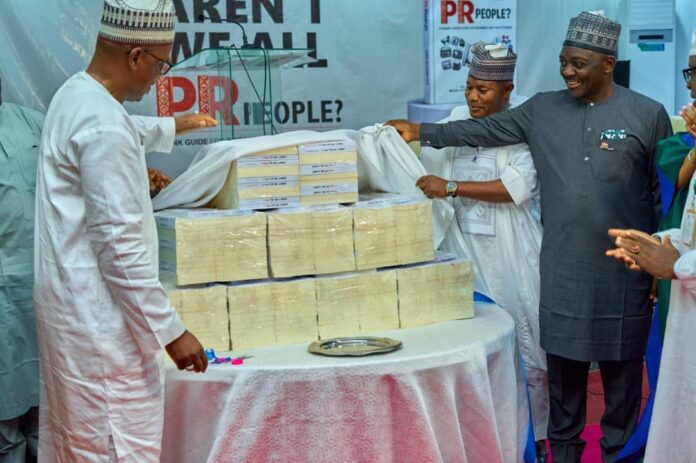
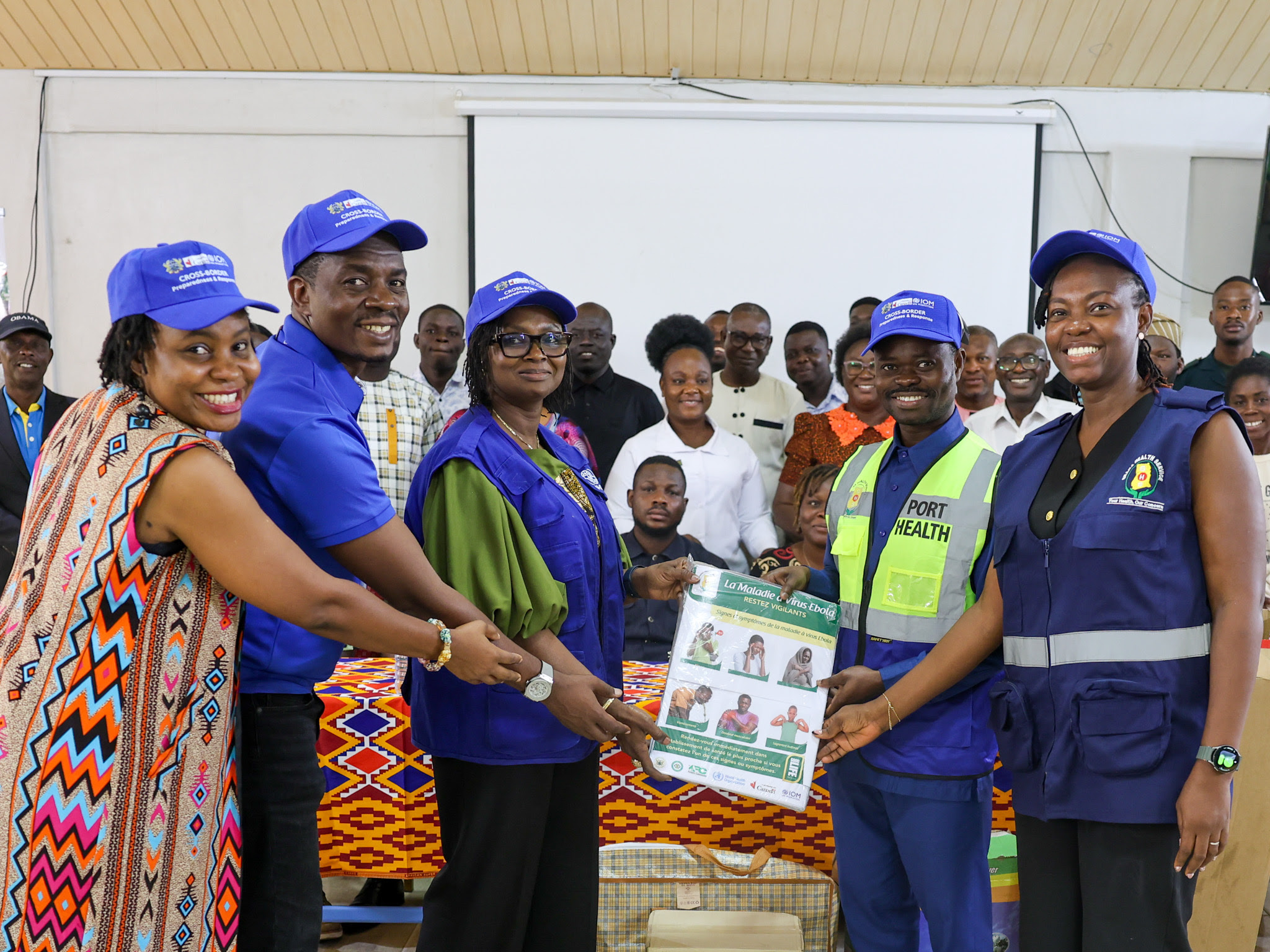
IOM also handed over equipment to port health teams on both sides: knapsack sprayers, facemasks, wellington boots, hand sanitizers, protective gloves, non-contact thermometers, digital tablets and bilingual IEC materials (posters) and roll-up banners on Ebola preparedness – supplies that let a health worker act on the protocol at the checkpoint itself, not just refer to it. The donation reinforces efforts to ensure that border health teams are better equipped to respond quickly and effectively to potential health emergencies while supporting safe cross-border mobility.
By strengthening coordination before an emergency occurs, countries can improve their preparedness and response capacity and coordinate responses effectively, while supporting the safe movement of people and goods.