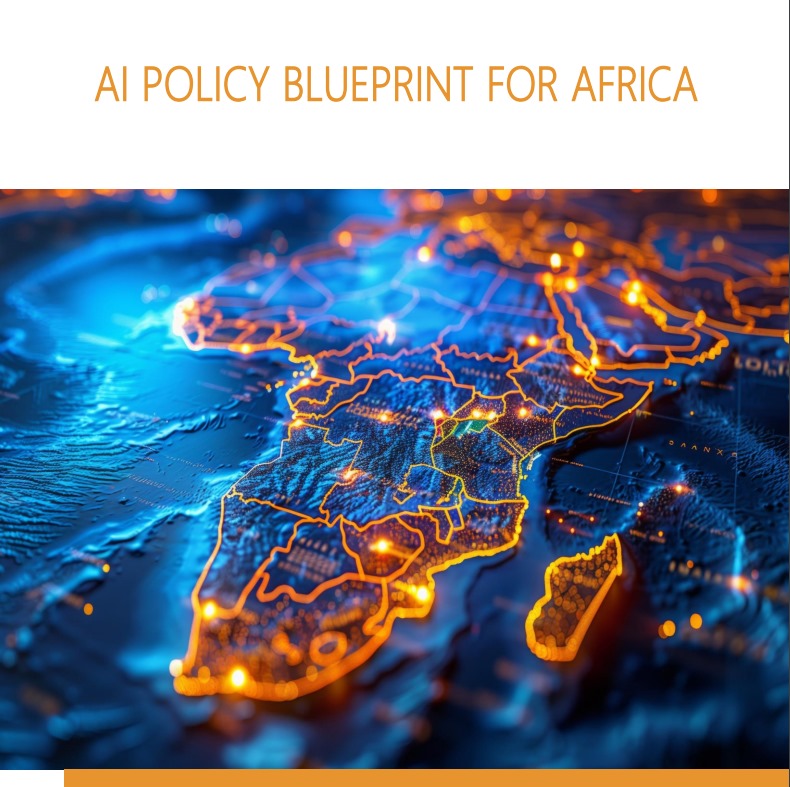
Wednesday August 12, 2026: With over half of all reported cybercrime in Africa now reportedly AI (Artificial Intelligence)-enabled, the continent is facing a new phase of digital crime that demands a stronger and more coordinated response. The International Criminal Police Organisation (INTERPOL)’s latest findings shows that cybercriminals are already exploiting the technology, and at a large scale. The findings come hot on the heels of a new report by Paradigm Initiative (PIN) which stresses the need for understanding AI technology and its capability.
Paradigm Initiative, a pan-African organisation that advocates for digital rights and inclusion with offices in Cameroon, Kenya, Nigeria, Senegal, Zambia and Zimbabwe and partners in more than 27 African countries, has developed a primer titled, ‘What is the whole fuss about AI?’ which identifies among others three key challenges with AI regulation including surveillance without accountability, the use of Internet shutdowns as a regulatory mechanism and the increase in copy and paste laws which fail to take local realities into account.
The organisation emphasises that AI users must ask the following critical questions regarding any AI systems; how we benefit (from the technology) as a society, create inclusive standards and the redress that exists when something goes wrong.
Another key element which comes into play is the creation of inclusive standards while developing the AI systems. “A standard written without women, rural communities, people with disabilities or African languages will fail them by design,” the report by PIN states in part. Paradigm Initiative observes that as much as AI strategies in African countries are multiplying, safeguards are lacking, with questions emerging as to whether the frameworks are rights-respecting, home-grown and open to the public.
INTERPOL’s African Cyberthreat Assessment Report 2026, released on 3 August, reports that 55 percent of cybercrimes reported in Africa are AI-enabled, while cybercrime-related financial losses have more than doubled since 2024 to reach USD ($) 484 million.
It further highlights that online scams are the most frequently reported form of cybercrime, with financial services, telecoms, and government institutions being the hardest hit. It also reveals that cybercrime-related financial losses have more than doubled since 2024, and criminals are bypassing biometric checks by creating AI-generated synthetic identities that combine real personal data with fabricated elements.
These findings underscore the rapidly evolving nature of cybercrime across Africa and the growing sophistication of the actors behind it, as well as the scale and urgency of the challenge.
Paradigm Initiative insists that governments and other stakeholders should not approach emerging technologies such as artificial intelligence solely through the lens of risk or restriction. This requires an equally dynamic response that brings together governments, law enforcement agencies, technology companies, financial institutions, civil society, researchers, and users of digital platforms. The organisation advocates for the presence of the right stakeholders at the table to develop meaningful, practical and rights-respecting solutions that address abuse while ensuring that these technologies are maximised for public good.
PIN remains committed to advancing digital rights and inclusion across Africa and supporting solutions that make the digital environment safer, more inclusive, and more resilient without compromising the fundamental rights of the people it is meant to serve.
About PIN
Paradigm Initiative (PIN) connects under-served young Africans with digital opportunities and ensures digital rights for all. We have worked in communities across Nigeria since 2007 and across Africa since 2017, building experience, community trust, and an organisational culture that positions us as a leading non-governmental organisation in ICT for Development and digital rights on the continent.
We promote a rights-respecting continent through our team in subregional offices in Cameroon, Kenya, Nigeria, Senegal, Zambia, and Zimbabwe. Our interventions are spread across more than 27 African countries. Paradigm Initiative pushes for an Internet that is open, accessible, and affordable to all.
Our programmes include a Life Skills, ICTs, Financial Literacy, and Entrepreneurship (LIFE) Training Programme, a digital readiness workshop for youth, and a Life at Schools Club Programme. PIN has also built online platforms such as Ayeta and Ripoti that educate and serve as safe spaces for reporting digital rights violations.