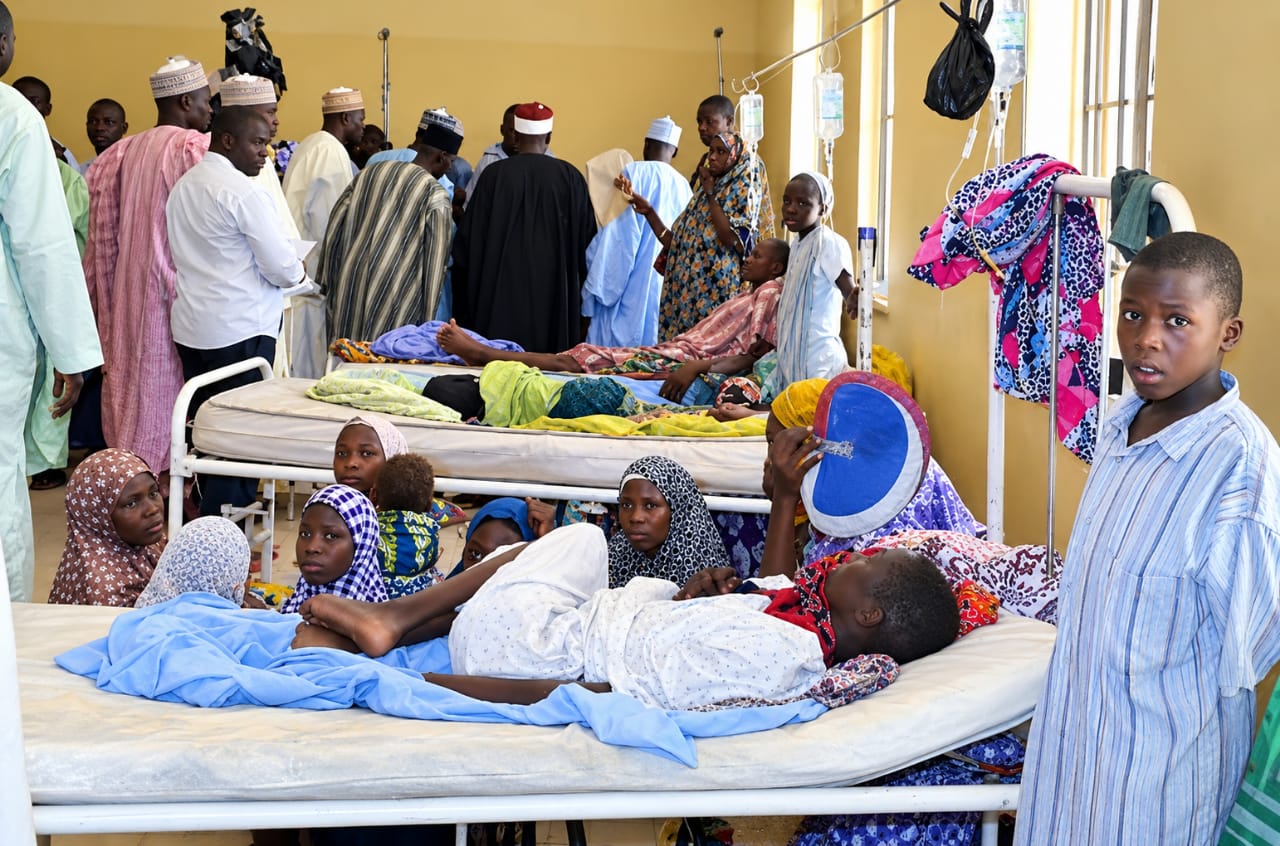
When one walks into most teaching or general hospitals in the country today, the discomfort is immediate. Patients are seen standing in long queues while others sit on benches or on the floor outside consultation rooms, worn out by waiting. Health workers move between wards with exhaustion written on their faces, while frustration hangs thick in the air.
The sharp smell of disinfectant, used to mask unpleasant odours within the premises, can almost leave one choking. It is a fitting metaphor for a system trying to cover deeper decay with surface solutions.
Majority of Nigerians are calling for an “overhaul” of our health system such as new equipment, new buildings, expansion and bigger budgets. But the critical question is: how emotionally intelligent and people-oriented are our healthcare workers?
In reality, poor remuneration and crushing workloads are two major reasons most medical professionals are relocating abroad. The few who remain are traumatized by the responsibility of catering to overwhelming patient numbers. Patients themselves often end up running around to buy syringes, gloves and even water for themselves.
Files are most times misplaced or lost, forcing patients to make fresh payments before they can be attended to.
Equipment, building and consistent electricity may be available, but without compassion, it is meaningless.
The Minister of Health and Social Welfare, Prof. Muhammad Ali Pate, alongside the Minister of State for Health, Dr. Iziaq Salako, stated that the government’s overhaul strategy is anchored on the “Presidential Health Sector Renewal Investment Initiative and the Sector-Wide Approach (SWAp). The plan includes reforming thousands of Primary Healthcare Centres (PHCs), upgrading federal tertiary hospitals, and building specialized oncology and trauma centres.
However, stakeholders including the Nigerian Medical Association, health experts, and civil society groups insist that deeper structural changes are needed. Top on the list is for health professionals to become more empathetic toward patients.
Critics also note that overall budgetary allocations still fall short of continental targets. They are demanding more transparent tracking and equitable distribution of funds between primary and tertiary care.
Private and public health experts further argue that hospitals need reliable power solutions such as solar and dedicated energy grids, as well as friendlier fiscal policies like equipment subsidies and tax reductions to function efficiently.
For proper accountability, civil society groups insist that a true overhaul requires rigorous grassroots monitoring, data transparency, and inclusive industrial relations. This is necessary to prevent recurring strikes and to restore public trust.
We need working theatres, labs, steady electricity, clean water, and beds. But beyond infrastructure, we need to overhaul the culture of care. That means hiring more health workers, orientating all staff on the importance of an empathetic mindset, and motivating them through continuous training. Workers must also be protected
There must be proper digital record-keeping, drug tracking, and telemedicine to reduce queues and corruption. Accountability should include feedback boxes that are actually read, and complaints that lead to action. General hospitals should also be better linked to PHCs so that minor cases do not choke the system.
Beyond policies and projects, every staff member from the Chief Medical Director to the cleaner must be trained to see the patient in front of them as someone’s relative. They should be treated the way we would want our loved ones treated at their most vulnerable.
Overhauling Nigeria’s general hospitals cannot just be about contracts and commissioning. It must be about dignity. Because healthcare is not only science.
Until we accept that empathy is key to patient healing and cooperation, we must not relent in advocating for kindness from health workers.
A hospital without empathy is just a building. Nigeria deserves hospitals that heal both the body and the human spirit.